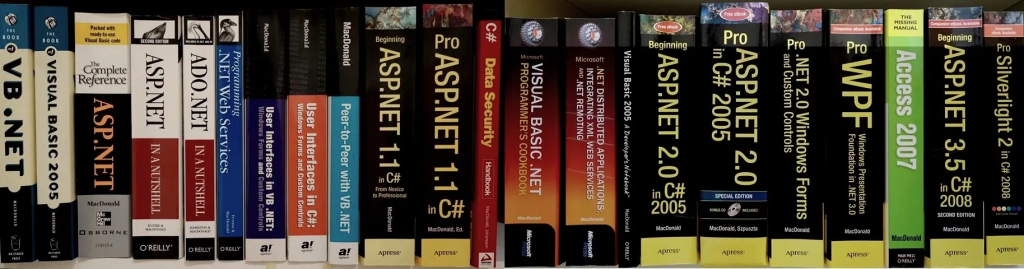
The easiest way to explain this is with a fable…
In the Before Times, the best way to gain knowledge about arcane skills like programming was with the help of a carefully crafted rectangular object we called a “book.” The internet existed in those days, but it was mostly full of little rotating globe animations and pages of links to other pages of links. It was not yet used to disseminate endless streams of conspiracy theories, or to compete for attention by advertising the most trivial parts of our lives. And it wasn’t particularly good at teaching people new skills.
Real information about new technology was valuable, and acquiring it wasn’t always easy. Professional software training companies charged freakishly expensive prices. Video courseware was clunky and perpetually out of date. The best practitioners in the art of teaching through books became sought-after experts, and were often courted by tech companies that wanted help explaining their products. There were more bookstores back then, and they were bigger, with none of the housewares, toys, and tchotchkes they hold today. It was not uncommon for a good third of a floor in a two-story bookstore to be filled with a sprawling collection of books about software topics, with a table set aside for each publisher, showcasing its distinct cover style (brilliant red with yearbook-style author photos, midnight blue with photos of galaxies, clean white with wood engravings of animals, and so on, and so on). This was madness on the one hand, because these books were obsolete in a year. But it made sense in another, because they were popular with professionals and job-seekers or any kind of self-motivated striver seeking to move up in the world, so they sold well during their brief lifespans.
It was a fun and slightly ridiculous world, and it shifted bit by bit and then all at once. And though I’m no longer tempted to write a thousand-page monolith on a new tech topic, I still sometimes miss the old world.